
Lenah Valley, Tasmania
Country | Palawa
Ophthalmic Gene Therapy Clinic
*Documentation Architects
Built | 2021
Builder | GLB Constructions
Photography | Max Combi
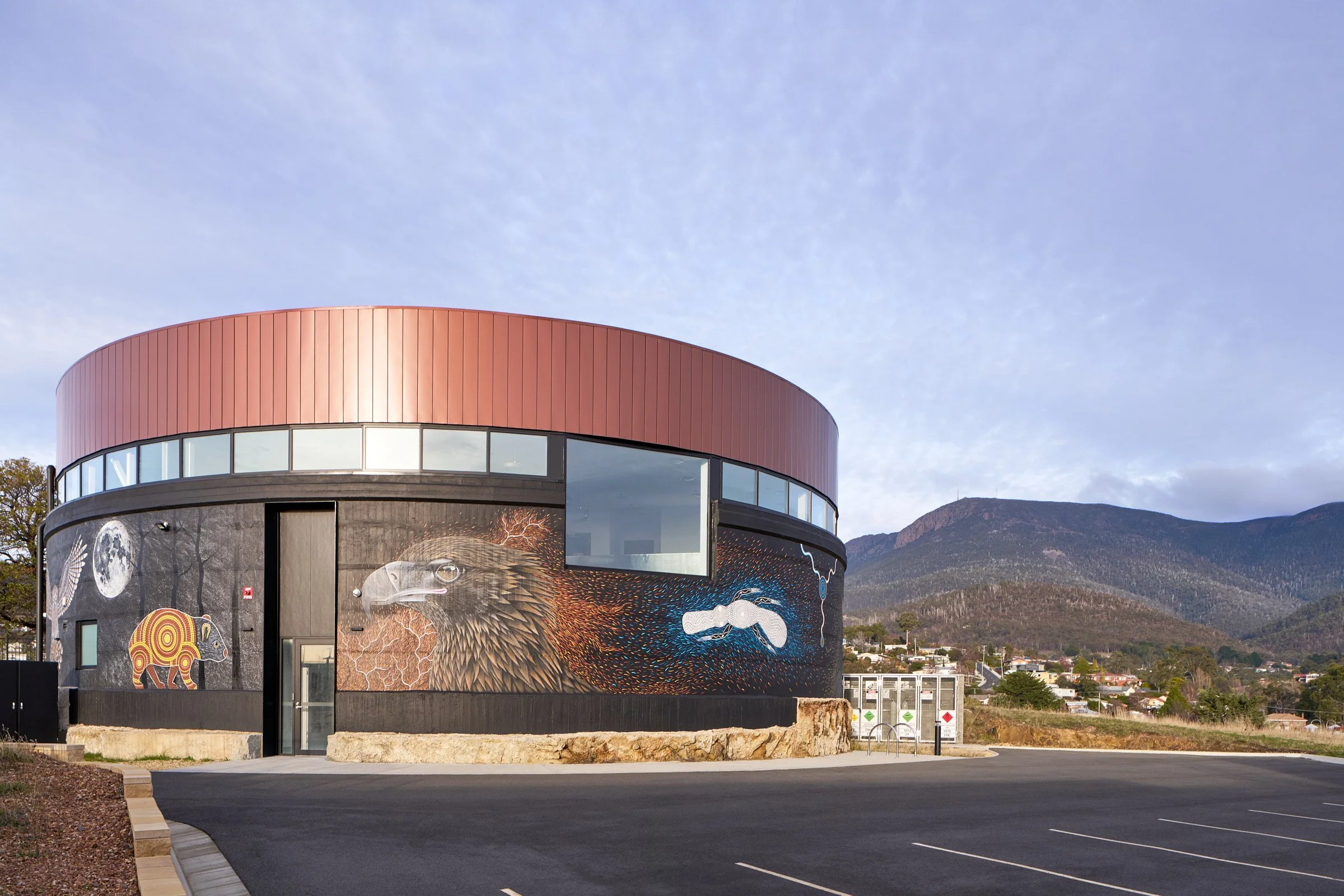
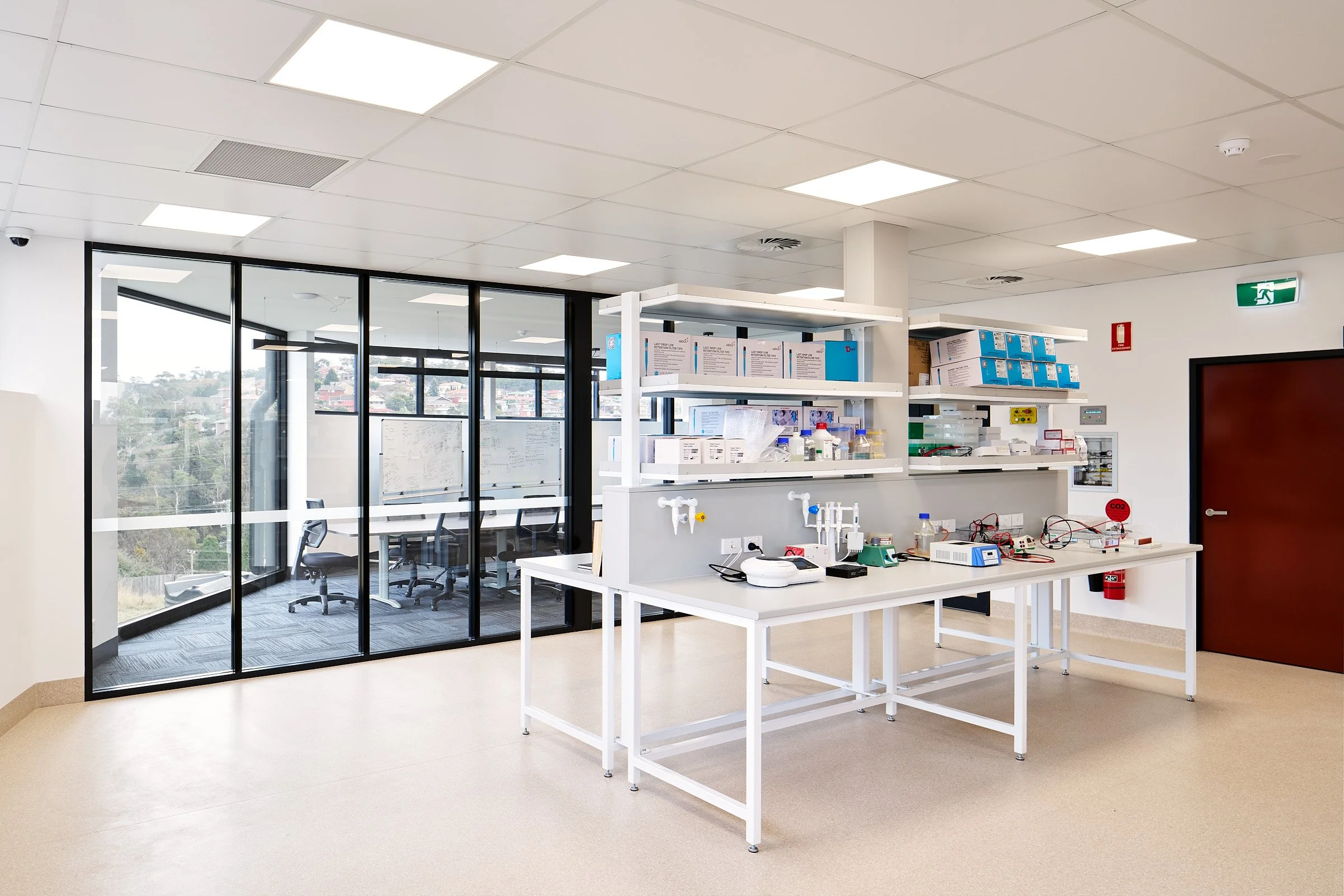
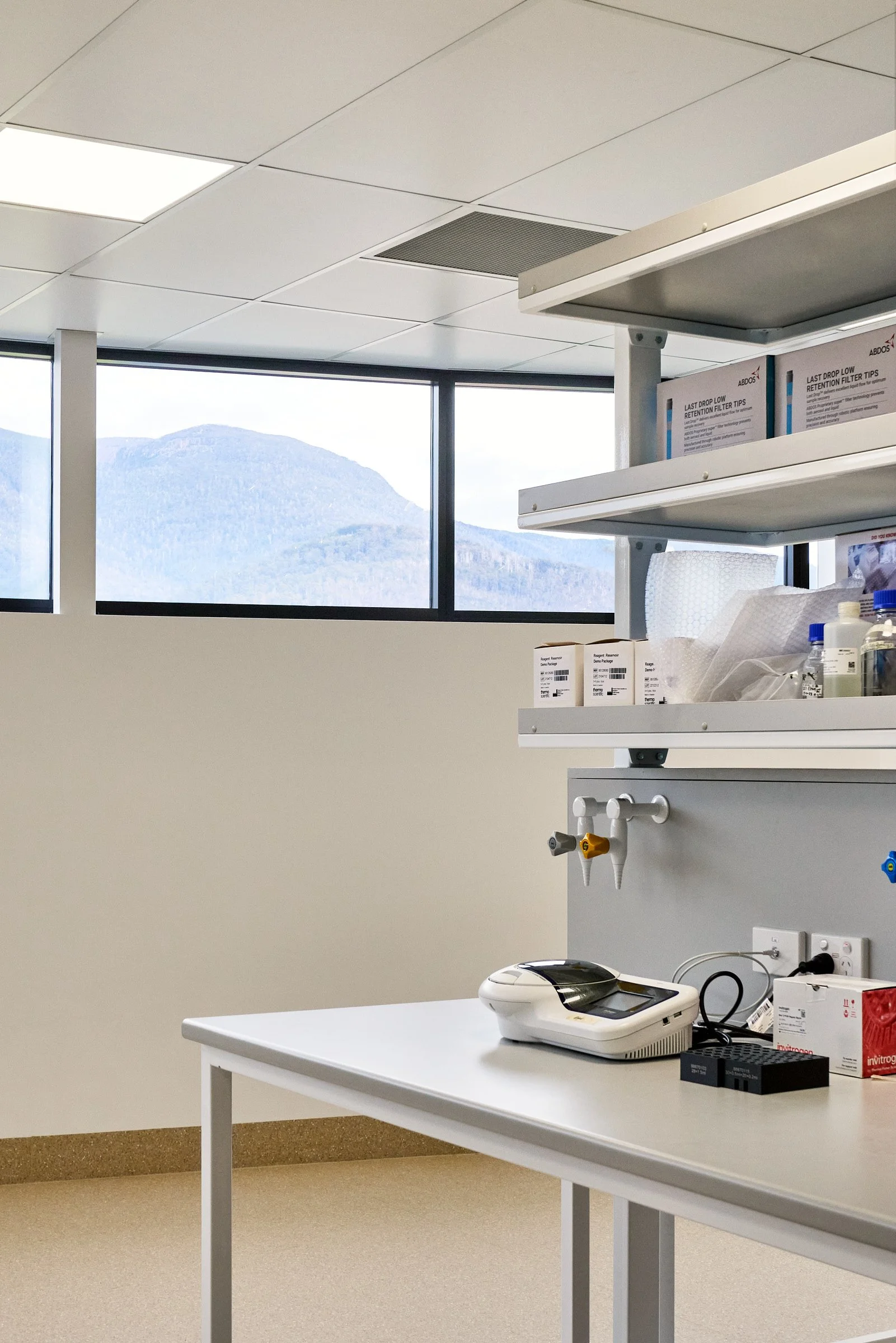
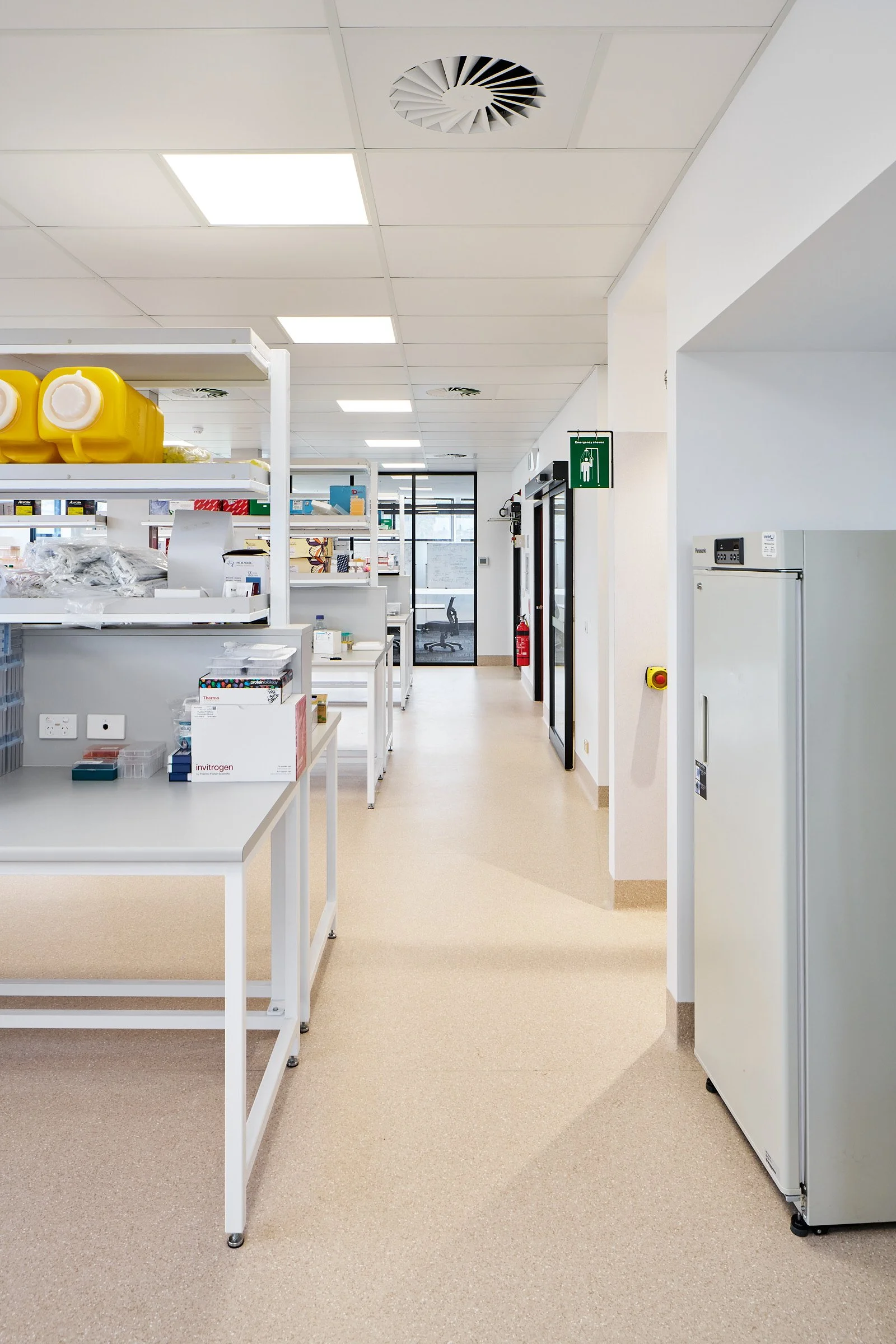
Located in Lenah Valley, the Ophthalmic Gene Therapy Clinic is a 750m² PC2-certified laboratory developed as Australia's first dedicated ophthalmic gene therapy centre. Led by ophthalmologist Brendon Vote and Professor Alex Hewitt, the facility supports advanced research into inherited retinal diseases and emerging gene-based therapies.
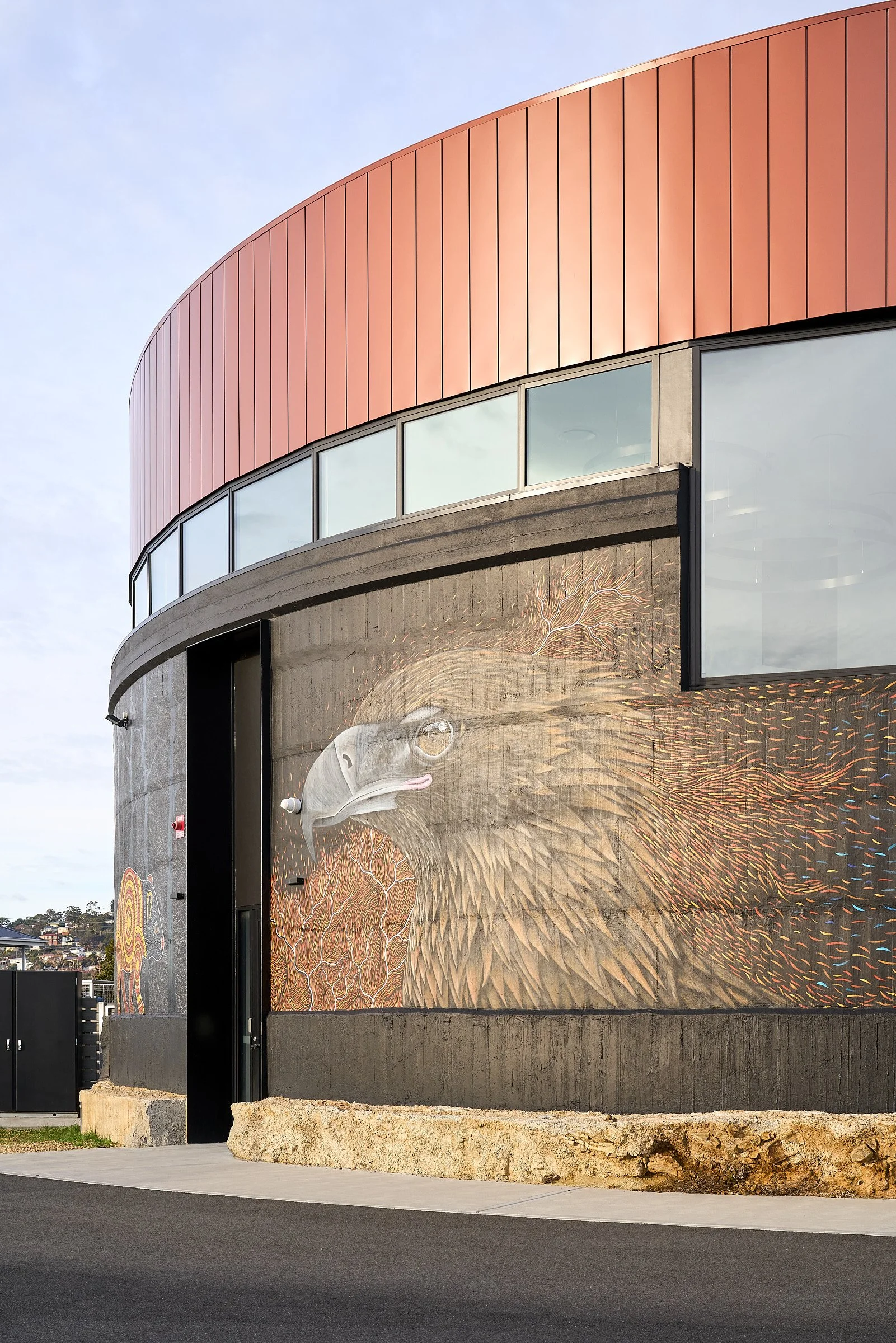
Occupying a prominent hilltop site, the project transforms an existing concrete water tank into a highly specialised research environment. The retained structure provided an unusually robust shell for adaptation, allowing a redundant piece of infrastructure to be repurposed as a contemporary laboratory while accommodating the stringent technical requirements of medical research.
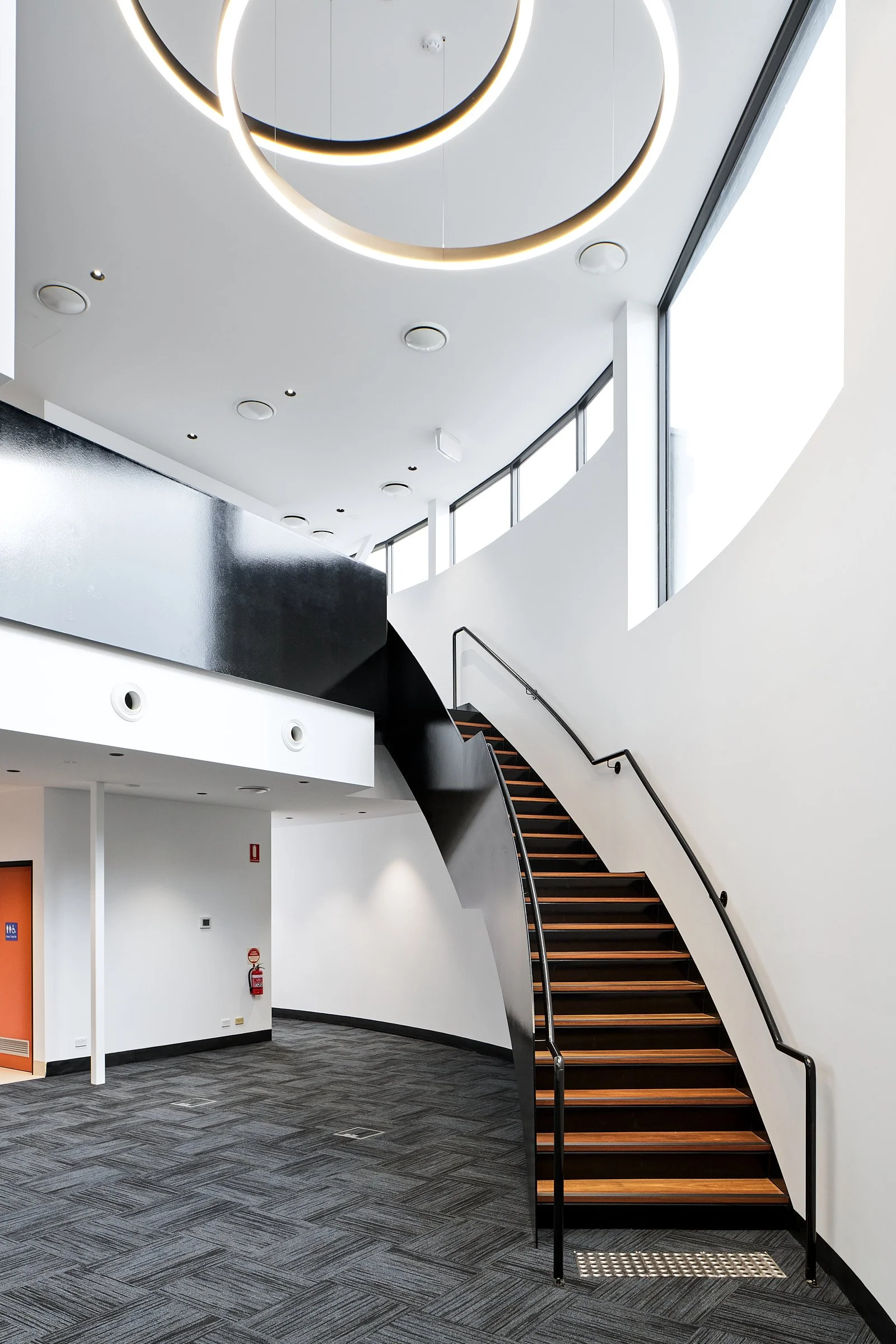
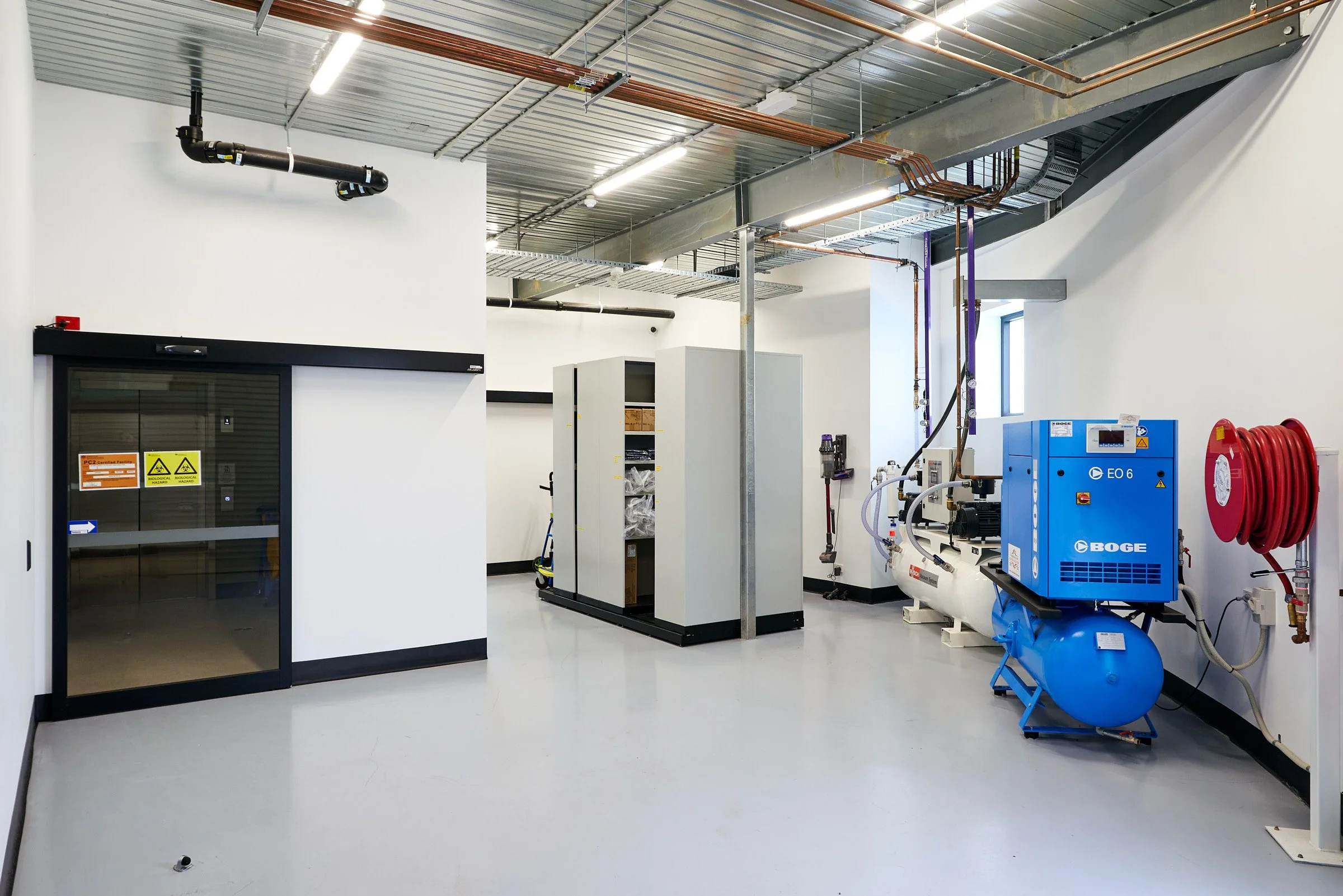
The design is driven by operational performance, precision and environmental control. Research, clinical and support spaces are carefully integrated within the existing structure, with particular attention given to PC2 certification requirements, laboratory workflows and the management of natural light, temperature and humidity. These systems create the stable conditions required for sensitive scientific work while supporting staff and patient comfort.
A key challenge was delivering a complex laboratory fit-out within a structure never intended for occupancy. Extensive coordination of specialist services, containment systems and technical infrastructure allowed the existing concrete shell to be retained as both a structural and architectural asset, minimising new intervention while reinforcing the facility's distinctive character.
The project demonstrates how adaptive reuse can support highly specialised medical research. Through the transformation of an existing water reservoir into a world-class laboratory environment, the clinic provides a purpose-built home for pioneering ophthalmic research while extending the life of an otherwise redundant structure.